Articles · Heavy Duty Diesel
5 Things Diesel Mechanics Should Prepare For in 2027
Trucks are getting smarter, more repairs run through software, and the technician shortage isn’t going away. Five things to get ready for in the year ahead.
MasterTech · Published · Updated
To prepare for 2027, diesel mechanics should sharpen their electronic diagnostic skills, keep up with software and over-the-air updates, learn when ADAS cameras and radar need recalibration, get high-voltage safety training before hybrid and electric trucks reach their shop, and use the technician shortage to push for training and fair pay. In ATRI’s 2025 research, 65.5% of trucking shops were understaffed, so skilled technicians have leverage.
Nearing the end of the year, it’s important to reflect on what matters and prepare for tomorrow. The past few years have brought big swings in staffing levels, company takeovers, and even a political climate that has affected your employment. Let’s take a look at what may be on the horizon for diesel mechanics in 2027.
1. Embrace the machine: know thine enemy
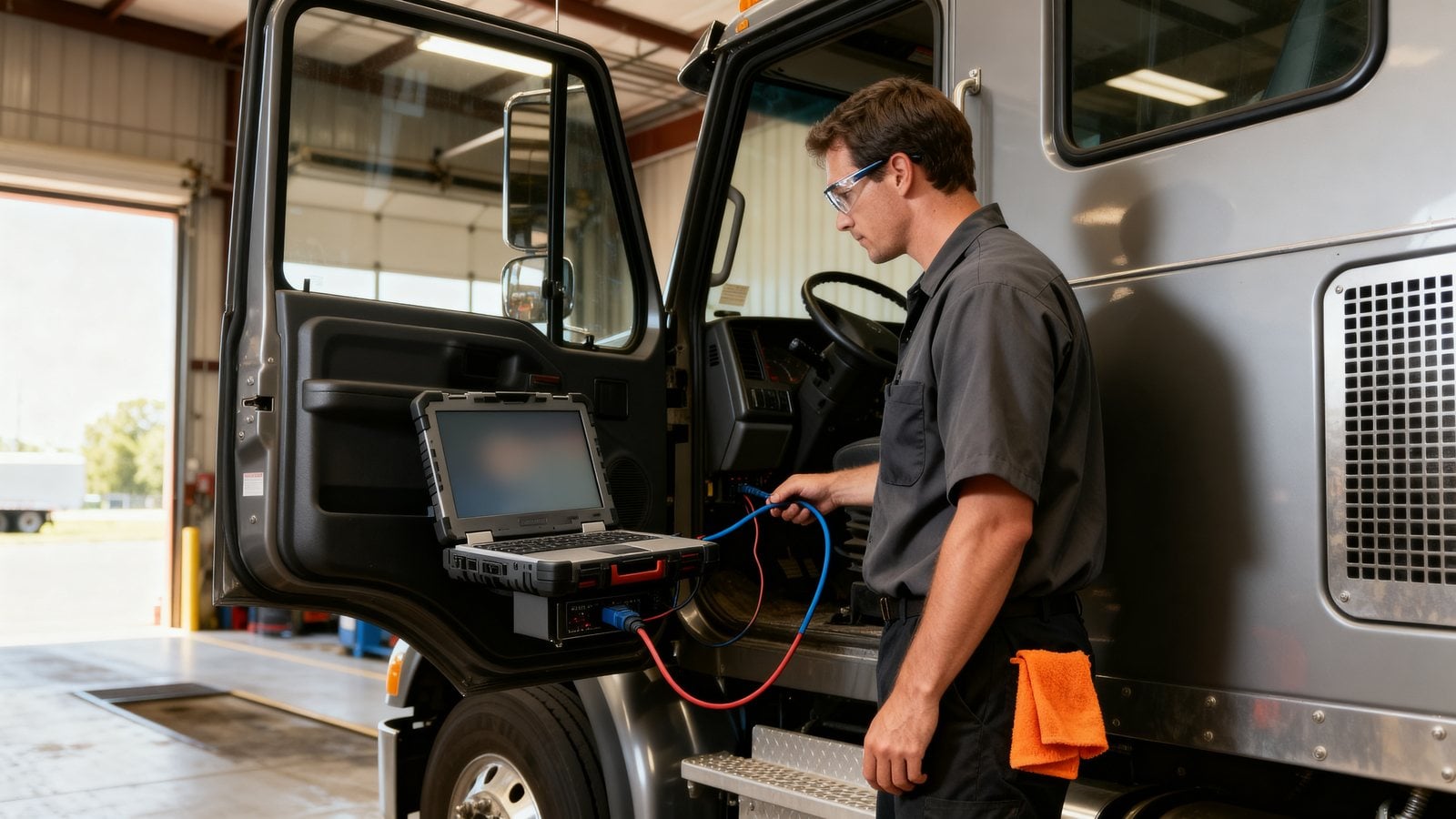
Newer trucks and equipment carry more electronic controls, and report more fault codes, than the models they replace. As fleets and customers retire their aging vehicles and equipment, it will be up to you to solve a growing number of technical problems. The Bureau of Labor Statistics already notes that in many shops, technicians use computer diagnostic equipment to find problems and adjust engine functions.
Relying solely on a basic code reader won’t cut it. Technicians need to master advanced diagnostic software and follow a structured, repeatable process: interpret scan-tool data, isolate network faults and, more and more often, read waveforms.
Your employer should be responsible enough to send you for this training or provide it in-house. If not, it may be up to you to tell them where it can be found, locally or online, so you can do your job properly. Which brings us to our next point.
2. Software-driven repairs and over-the-air updates
A modern truck runs on software, and manufacturers update it constantly. Detroit Connect can push firmware and parameter updates to connected trucks remotely, and Mack and Volvo offer over-the-air parameter and software updates too. Manufacturers also benefit from keeping repair data and diagnostic tools behind paywalls, subscriptions and proprietary courses, so it falls to you (or rather, the shop you work for) to keep up.
That may be starting to loosen. In June 2026 the EPA told vehicle manufacturers, heavy-duty included, to make the service information, training and tools needed to diagnose and repair emissions systems, such as a faulty DEF system, available on reasonable terms. A federal right-to-repair bill also cleared a House committee in 2026, but it isn’t law yet.
If your shop isn’t keeping up, you may need to do the legwork and recommend where it can get this knowledge. Heavy-duty shops typically pair each engine maker’s own software, such as Cummins INSITE, Detroit DiagnosticLink or Volvo Premium Tech Tool, with all-makes diagnostic kits and repair information from suppliers such as Diesel Laptops. On the automotive side, portals like ALLDATA and Mitchell 1 carry the wiring diagrams and Technical Service Bulletins (TSBs) for new models.
The calendar adds its own changes. The EPA’s 2027 heavy-duty NOx rules remain on schedule for January 2027, FleetOwner reported in September 2026, while a proposal to ease parts of them has not been finalized. And the new API CL-4 and FB-4 engine oils can be licensed from January 1, 2027.
3. ADAS calibration is part of the job
It’s not just the software that’s getting an update. With a bigger emphasis on safety, advanced driver assistance systems (ADAS), such as collision mitigation and lane departure warning, are showing up on more new trucks. Those systems rely on cameras and radar that have to be mounted and calibrated correctly. As Bendix’s Nick Broyles told Trucknews, a properly working system needs to be properly calibrated and properly mounted, and a misaligned camera will stop it working. Even minor damage, like a curb strike, can knock out a bumper-mounted radar.
So a windshield replacement, front-end or bumper repairs, or anything else that disturbs a sensor or its bracket can mean a calibration, done to the truck maker’s or the system supplier’s procedure. That creates a big overlap between traditional mechanical work, body repair and electronics: technicians need to fix the physical damage and then bring delicate sensors back into spec.
4. High-voltage safety and EV/hybrid awareness
They’ve been saying “the future is electric” for decades. In heavy trucks it’s still early days: battery-electric models make up less than 1% of new Class 6–8 truck sales in North America, Transport Topics reported in August 2026, and manufacturers expect sales to stay modest into 2027. But as the technology and the charging infrastructure get cheaper, chances are you’ll see more hybrid and electric trucks, buses and equipment come through the door.
Above all, get trained in high-voltage safety before you touch one: battery isolation procedures, insulated tools and the right protective gear. Knowing exactly how to safely de-energize a high-voltage system is critical to preventing catastrophic shop injuries before any mechanical or structural work begins. ASE’s xEV certifications, which cover medium- and heavy-duty hybrid and electric vehicles, are one way to show an employer you’re ready.
5. The “massive void”: the industry’s loss is your gain
As you’ve no doubt heard, the industry has been screaming for technicians for years. In ATRI’s 2025 research, 65.5% of trucking shops were understaffed, with an average of 19.3% of positions unfilled. The void keeps growing because of:
- Retirements. The BLS projects about 24,400 diesel technician openings a year through 2035, many of them to replace workers who retire or leave the trade.
- A higher barrier to entry. You need to know a lot more than your parents did to get by in this trade.
- Pay that finally moved. It took a global pandemic for pay to really rise. The BLS median for diesel technicians went from $48,500 in May 2019 to $61,770 in May 2025, about 27% before inflation. For heavy equipment, see our heavy equipment mechanic salary guide.
New people are coming. Enrollment at vocational-focused public two-year colleges grew for the third year in a row in spring 2025 (+11.7%), according to the National Student Clearinghouse, while computer science enrollment is falling. Until those students finish training and reach the shop floor, your employer should be more understanding about rising training and tool costs, and about pay.
Do your research before you make a move, though. Some industries and locations have actually slowed down, for reasons ranging from new legislation to rising costs.
Ready for your next move?
MasterTech places diesel and heavy-duty technicians in permanent, direct-hire jobs in the US and Canada. Browse open jobs, or send us your details if nothing fits yet.
Hiring for this? See how we recruit for heavy duty diesel.